19th Century Japanese Burl Wood Dai
19th Century Japanese Burl Wood Dai
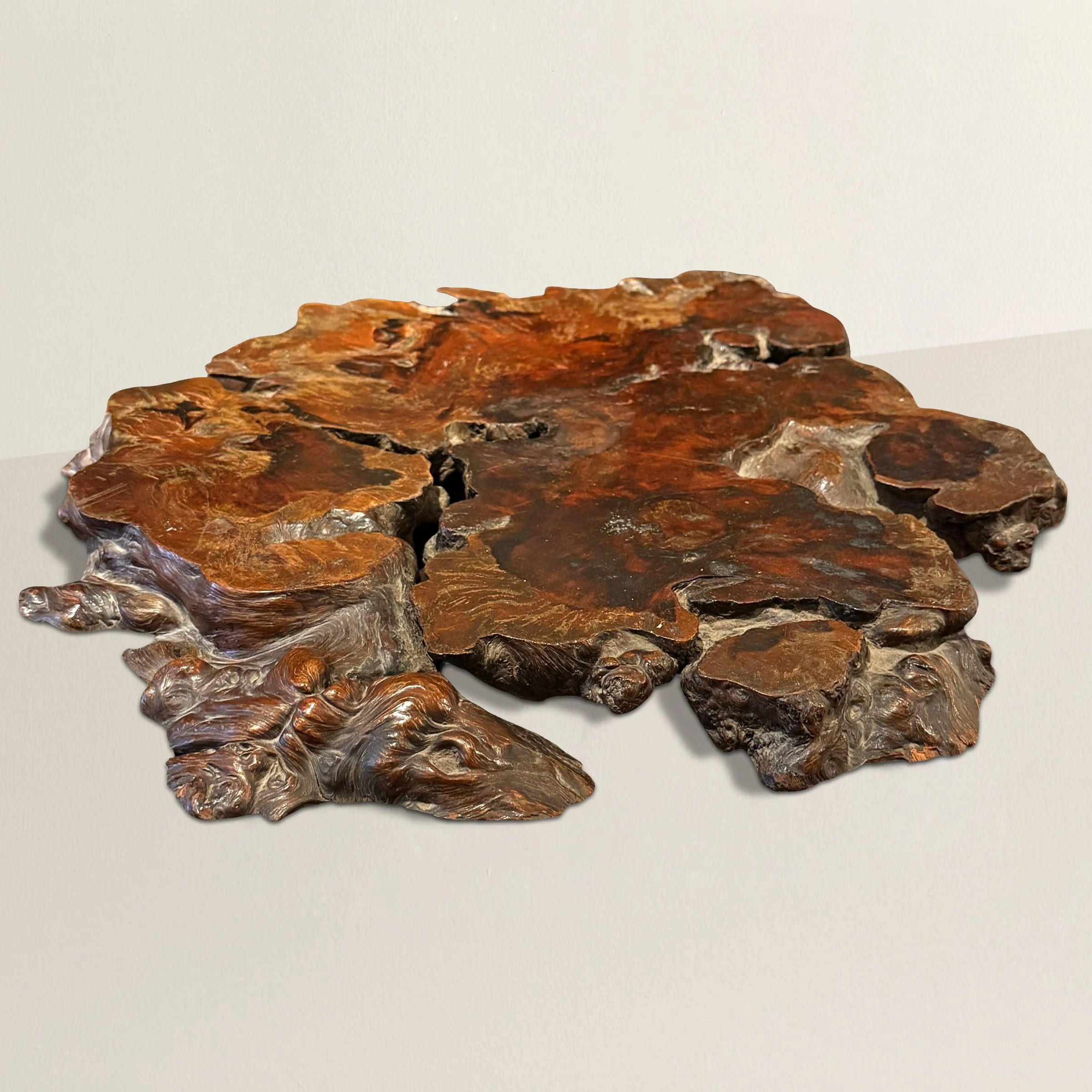
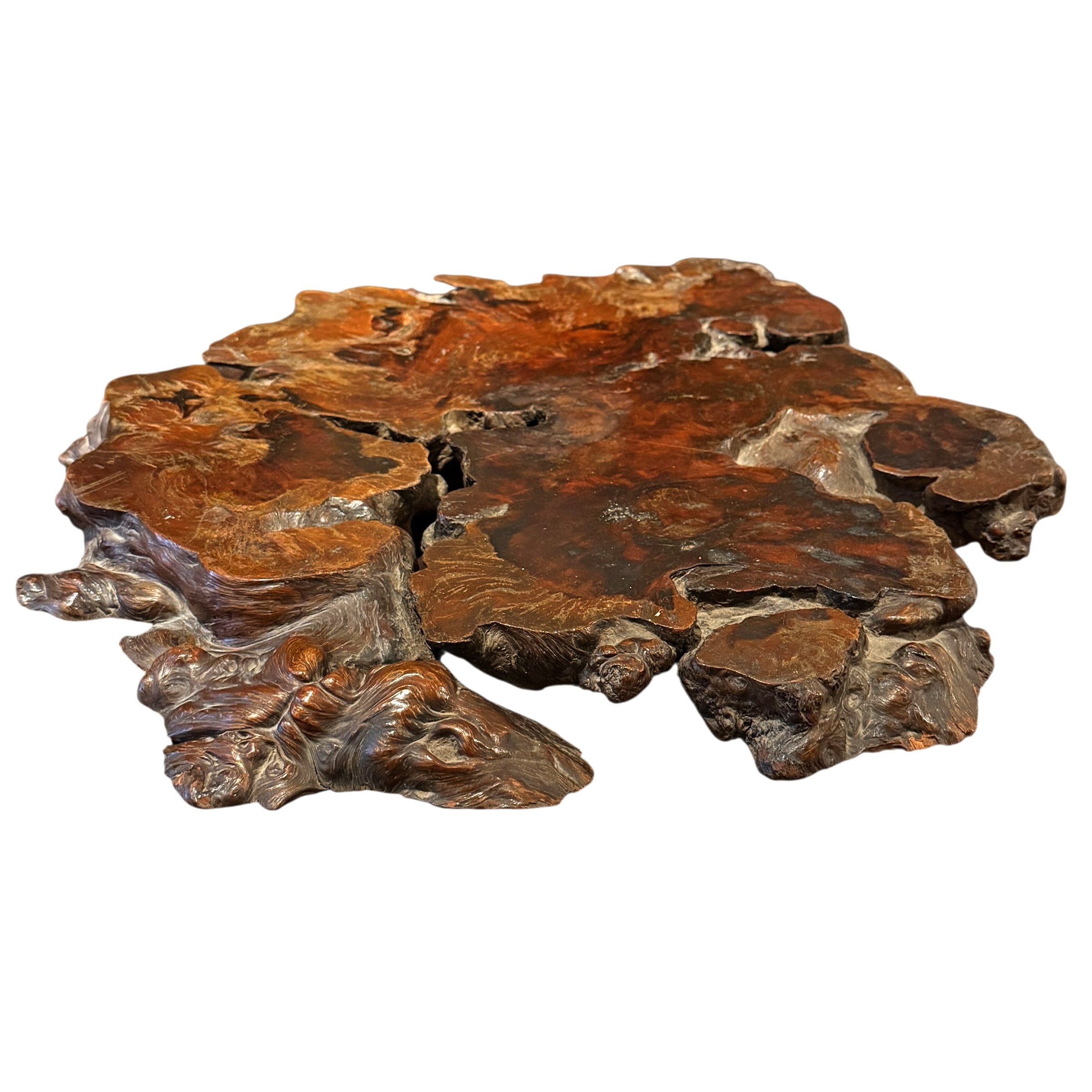
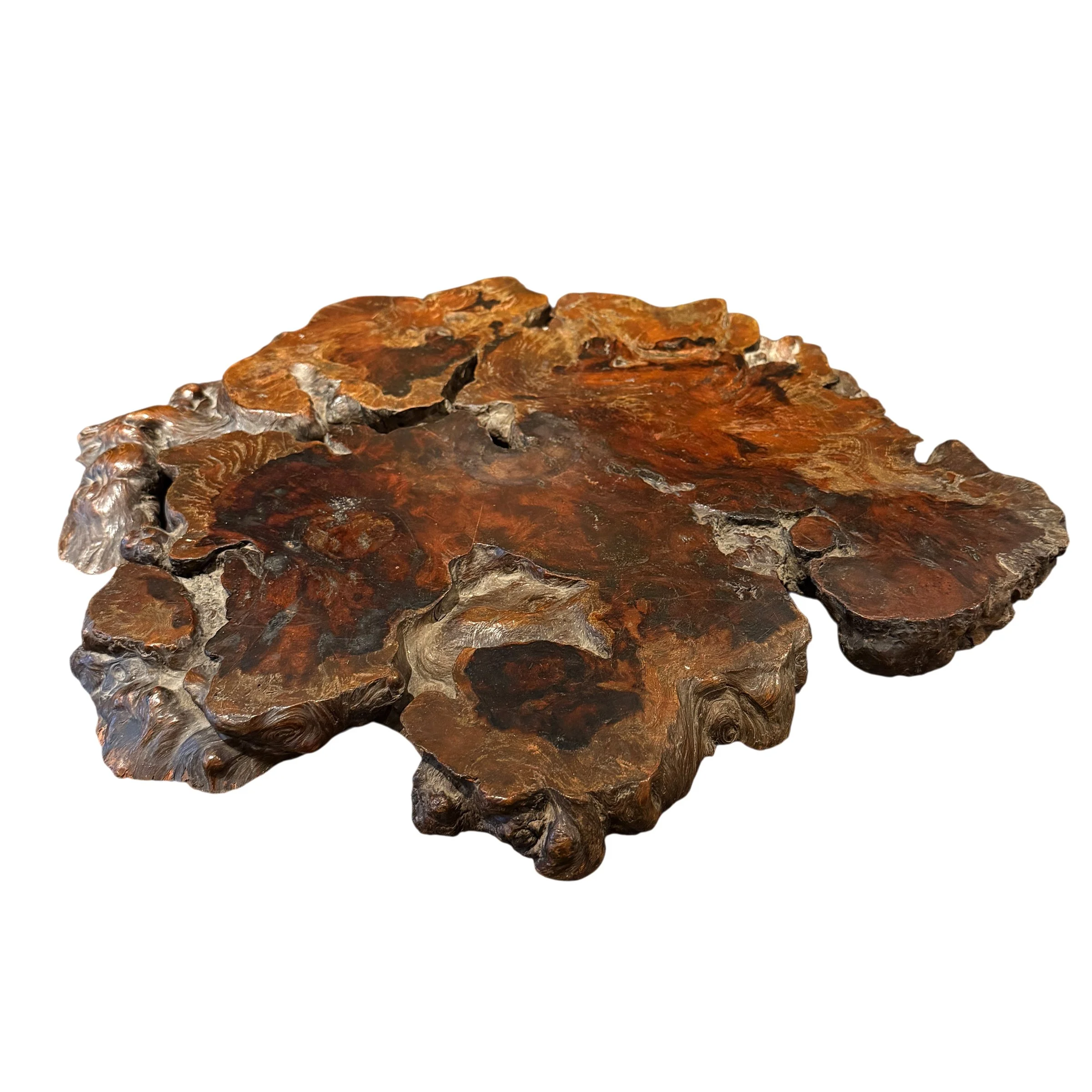
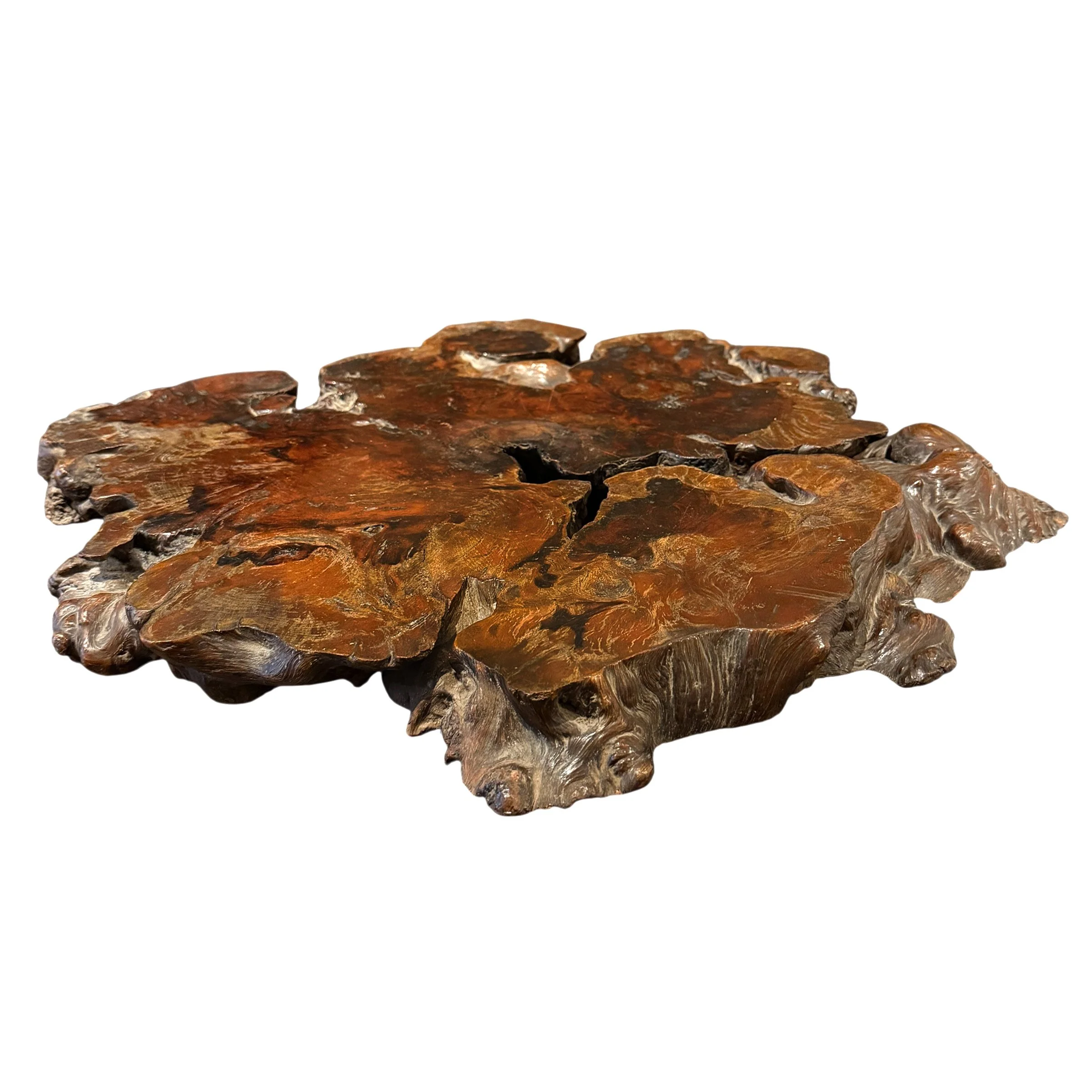
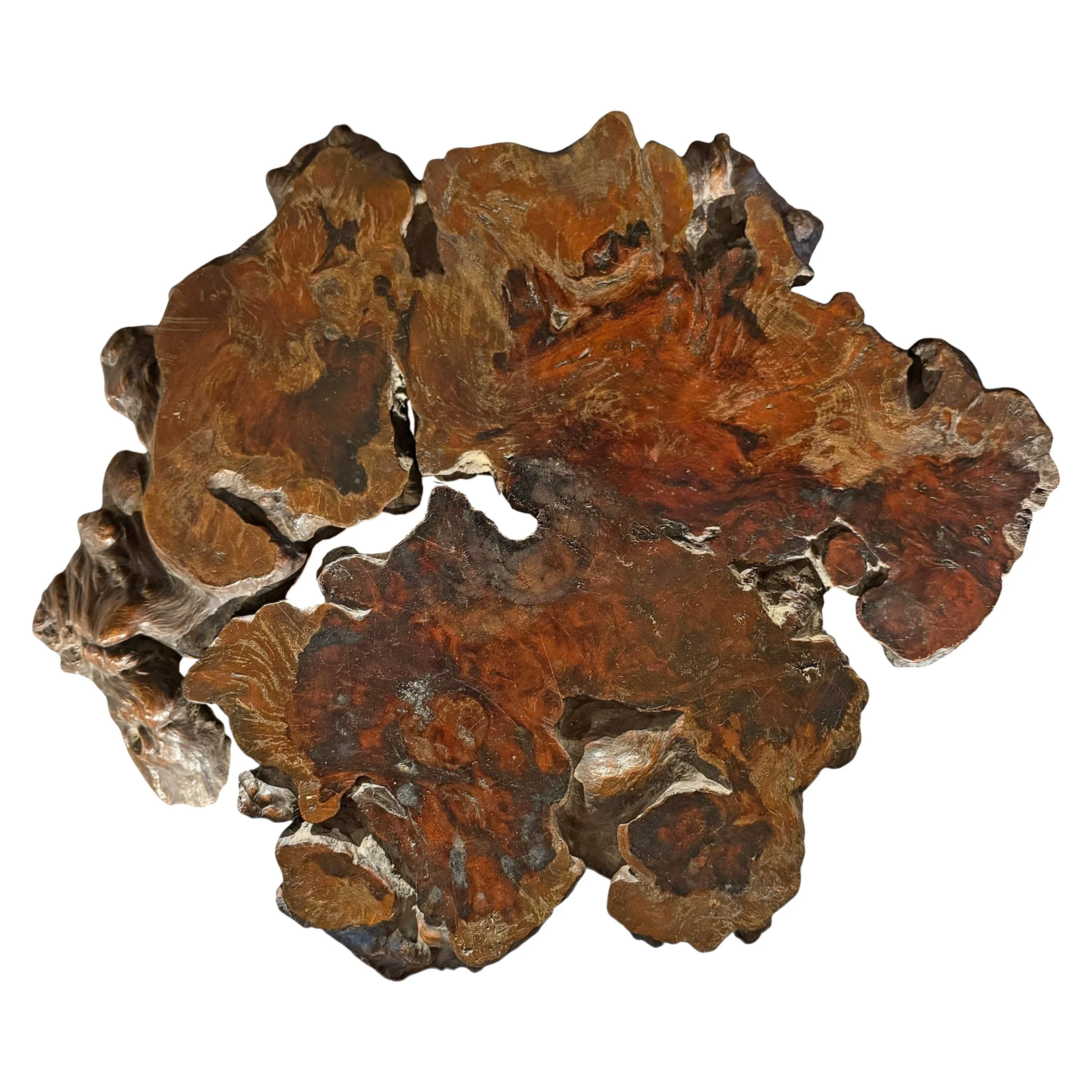
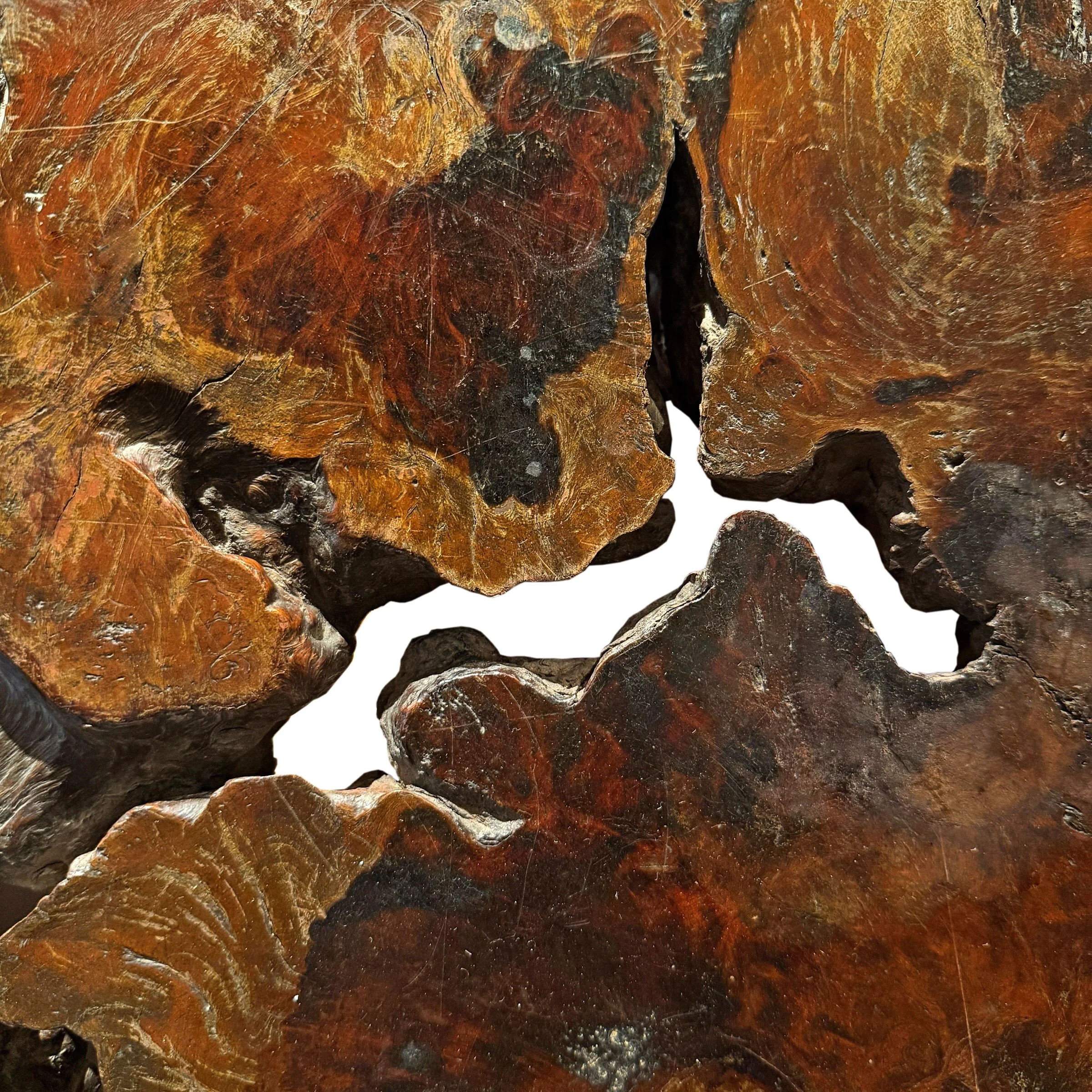
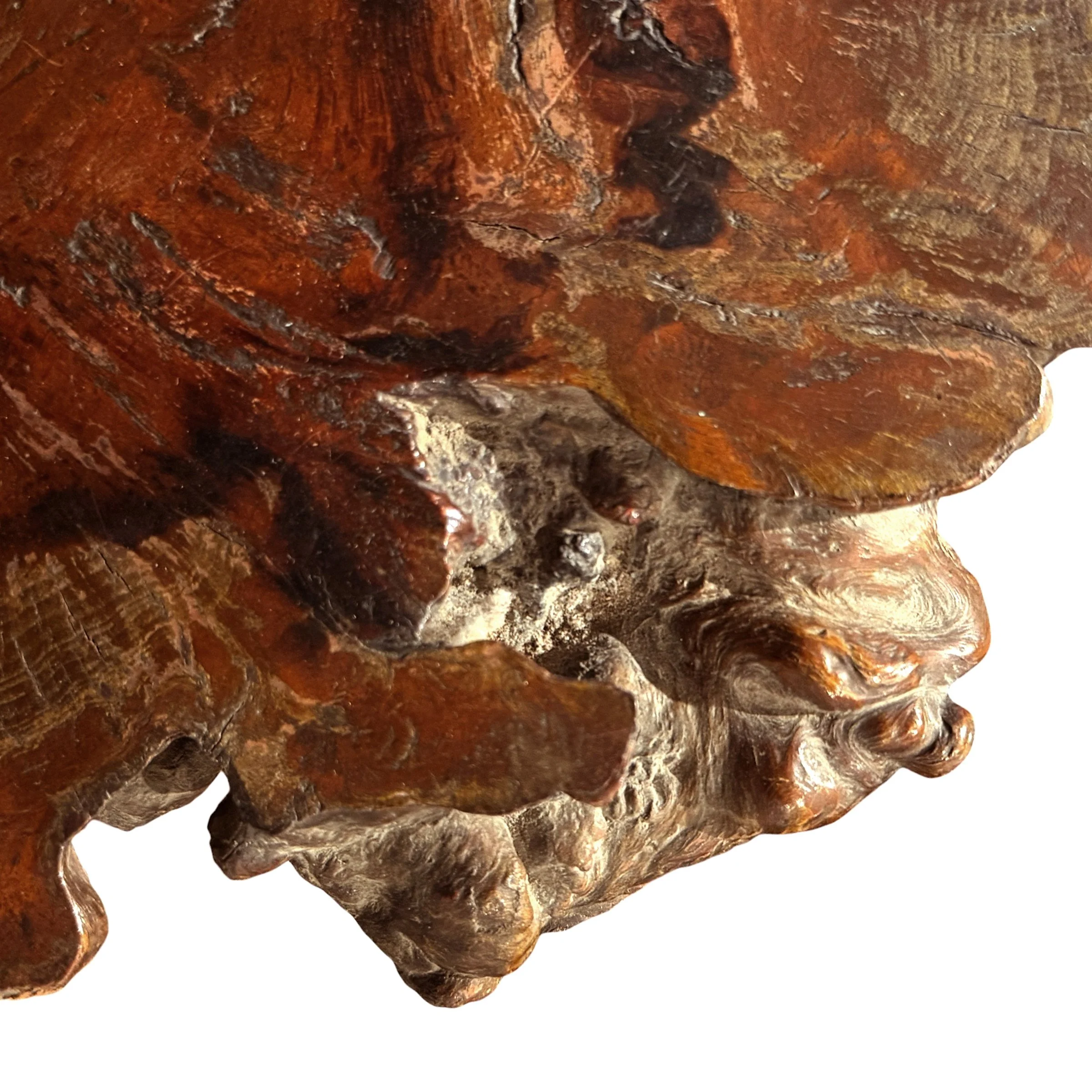
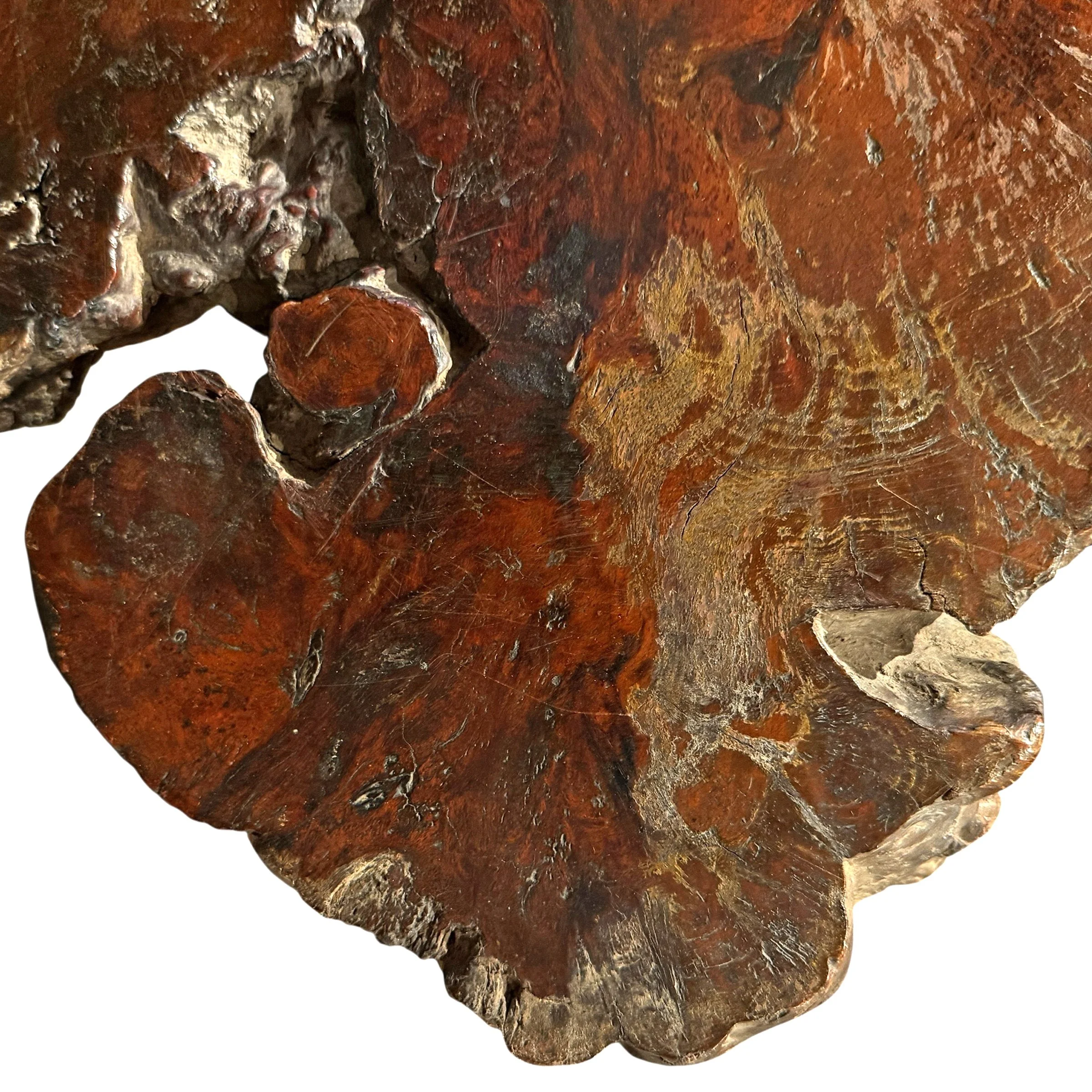
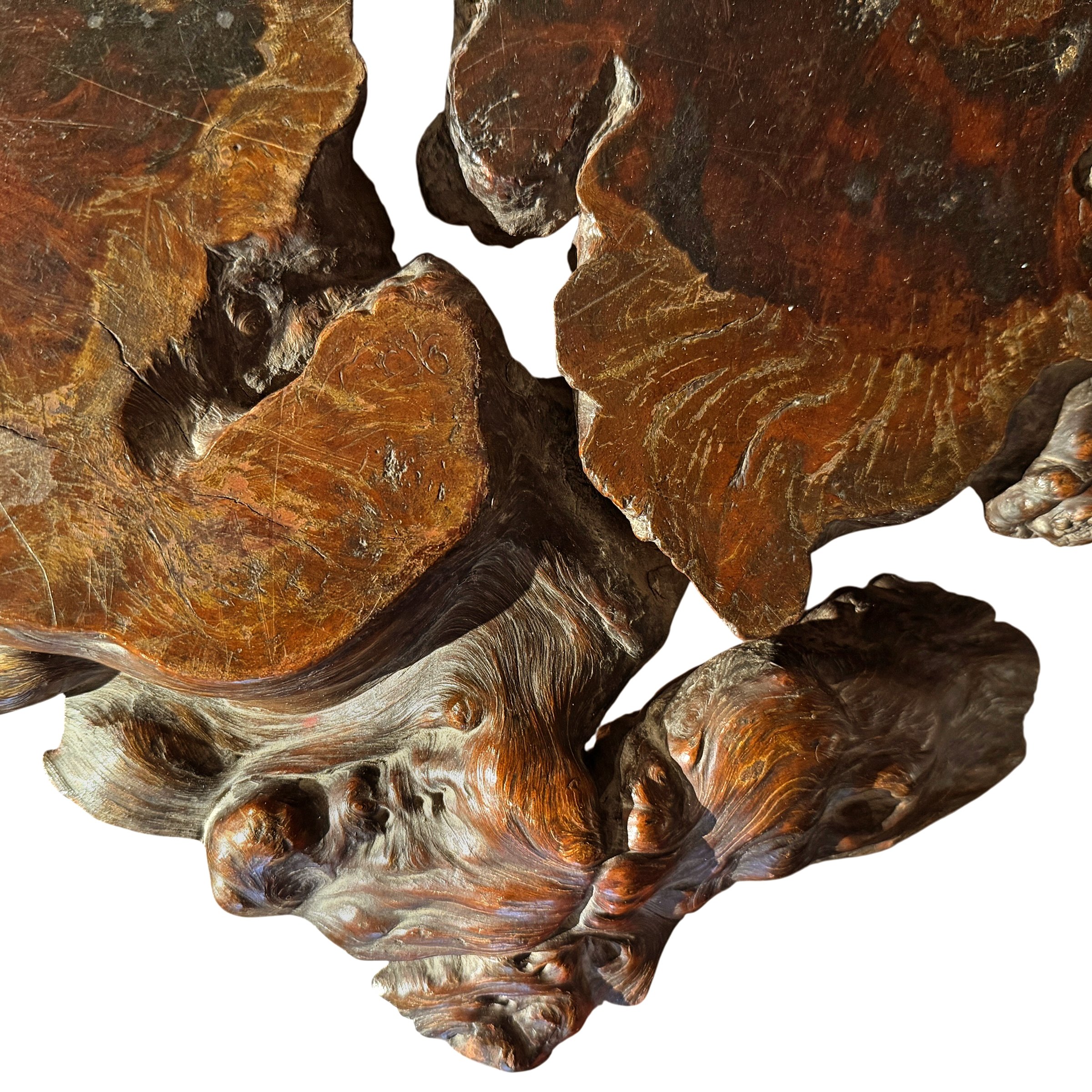
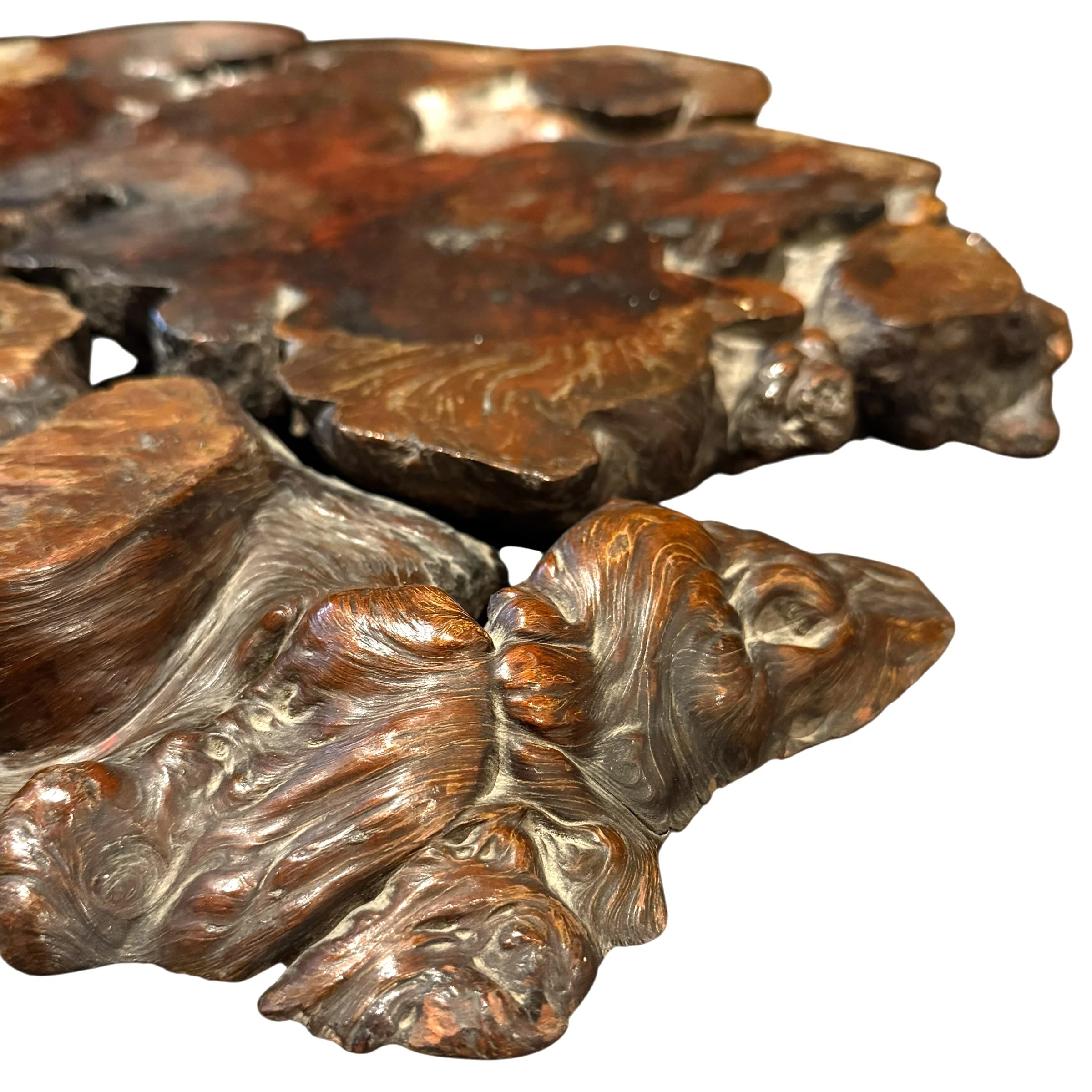
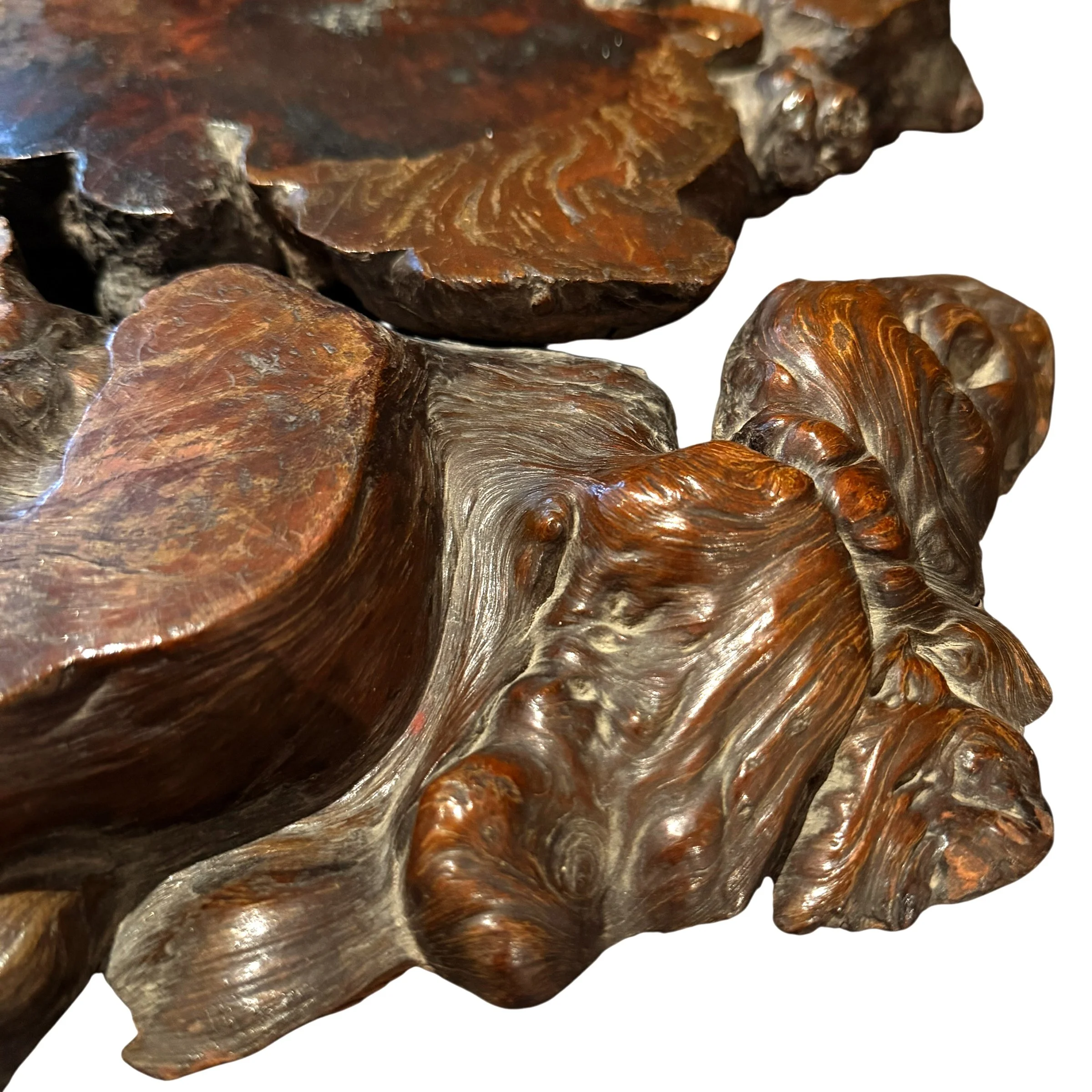
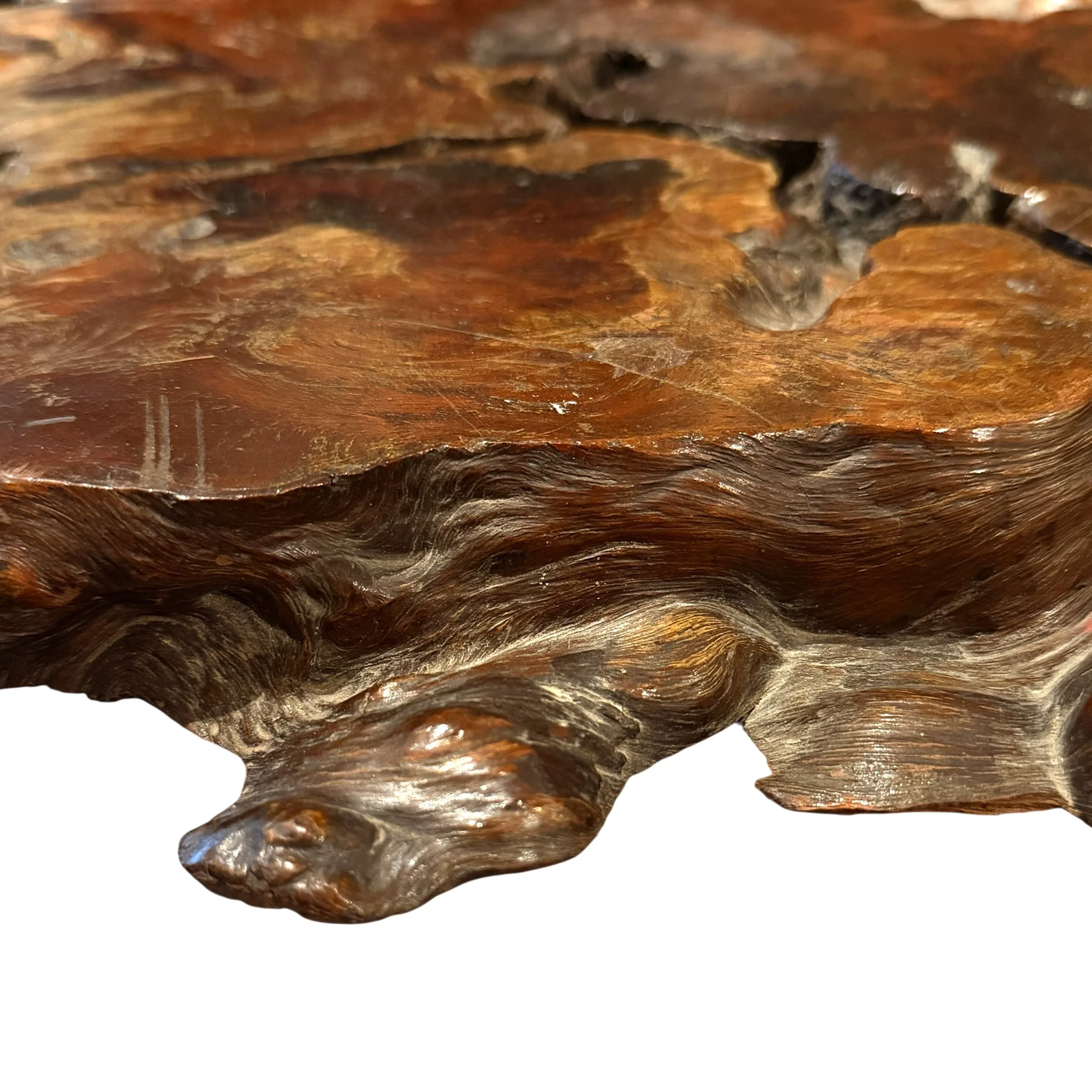
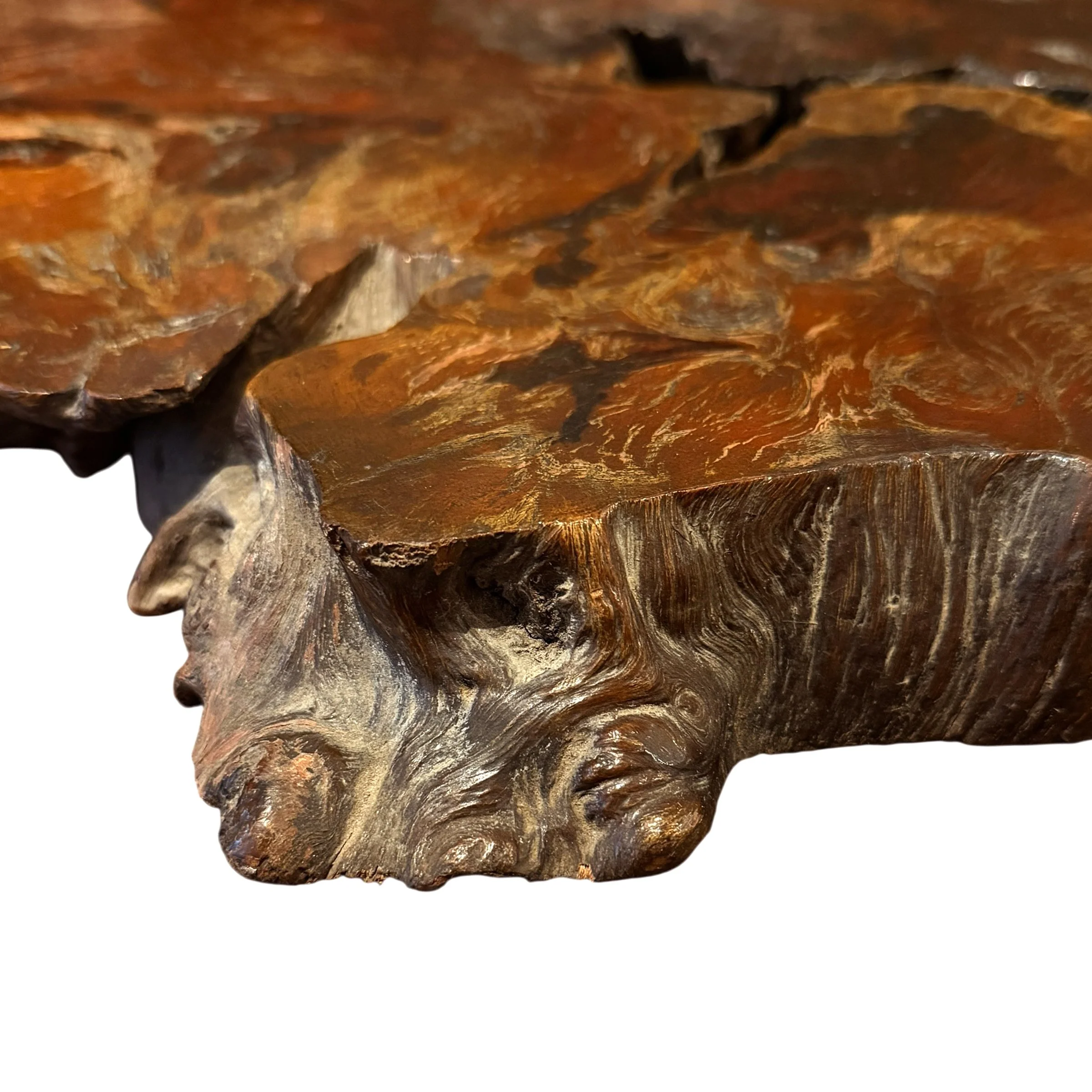
This remarkable 19th-century Japanese dai begins as a single, monumental slice of burl—nearly two inches thick—cut from a tree whose grain had spent decades twisting into wild, unpredictable beauty. The top and underside have been carefully flattened, but the perimeter remains gloriously untouched. Live edges ripple outward in dramatic undulations, preserving the burl’s original contours and the silky, weathered texture of the tree’s exterior.
Set on a tabletop, the effect is quietly mesmerizing. The edges seem to dissolve into the surface beneath it, the way a rocky outcrop rises from still water—part landscape, part sculpture.
In Japan, stands like this were meant to elevate something precious: a bronze vessel, a ceramic bowl, a small arrangement of flowers. Yet this example hardly requires accompaniment. It reads as pure natural architecture—an object shaped by time, chance, and the quiet genius of the forest itself.
23 in. W x 20 in. D x 1.75 in. H